Introduction
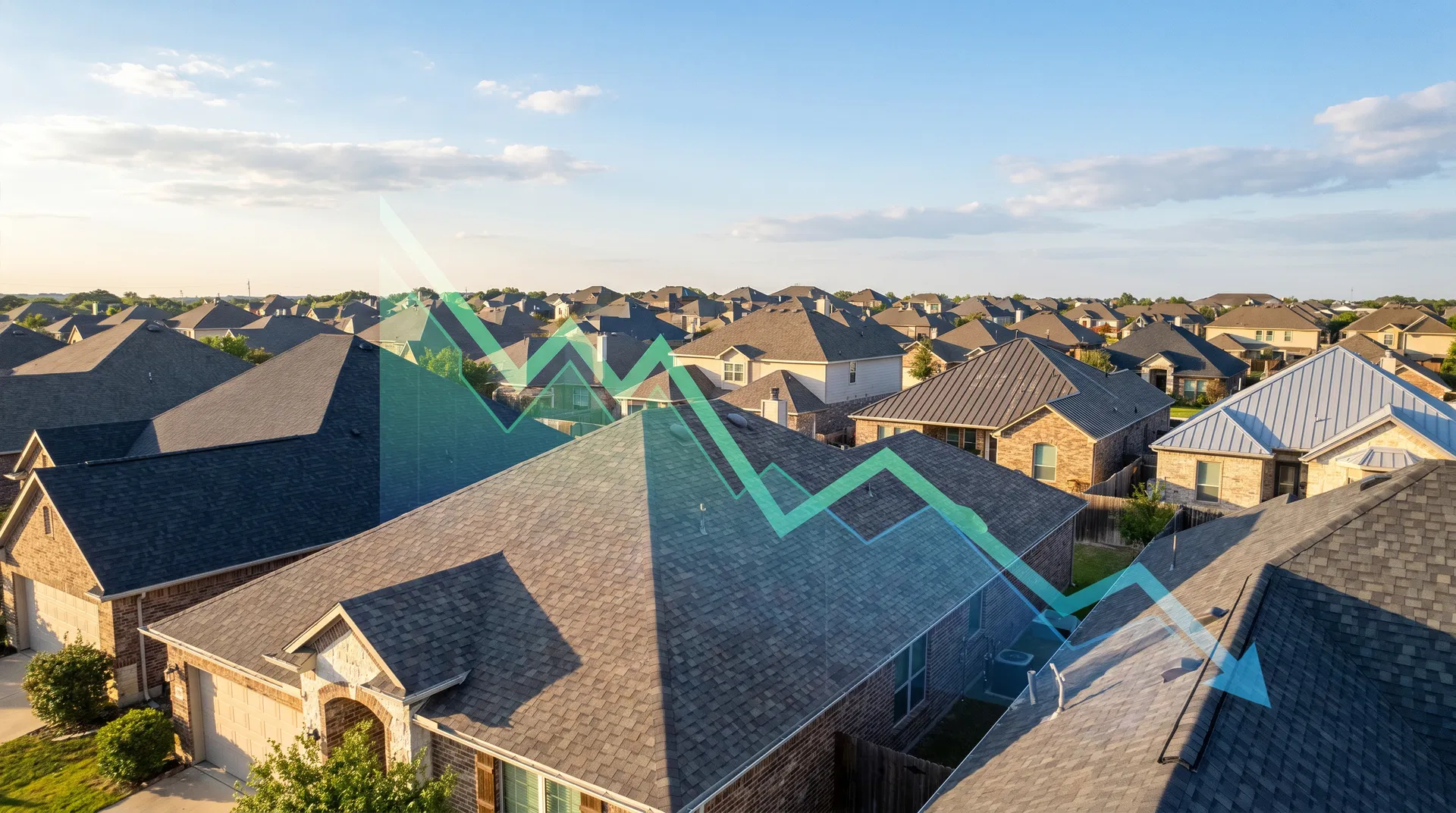
If you are planning a roof replacement in 2026, you are probably wondering whether prices will come down from the highs seen in recent years. After the supply chain disruptions of 2021-2023 and the inflation surge that followed, homeowners have been waiting for relief. The good news is that some material costs have stabilized. The challenging news is that labor shortages continue to keep overall project costs elevated in most markets. In this comprehensive market forecast, we analyze the key factors driving roofing costs in 2026 and provide actionable advice on timing your project for maximum savings.
Current State of Roofing Costs in 2026
As of early 2026, the average cost to replace a roof on a standard 2,000 square foot home ranges from $9,000 to $22,000, depending on materials and location. Asphalt shingles remain the most affordable option at $4.50 to $8.00 per square foot installed, while metal roofing runs $8.00 to $16.00 per square foot. These prices represent a modest 3-5% decrease from the 2024 peak for materials, but labor costs have increased 6-8% year over year due to continued skilled worker shortages in the construction trades.
Factors That Could Lower Prices
Several market forces are working in favor of homeowners looking for lower roofing costs in 2026:
| Factor | Impact on Price | Timeline |
|---|---|---|
| Asphalt shingle supply normalization | -5% to -8% on materials | Already happening |
| New manufacturing capacity online | -3% to -5% on materials | Q3-Q4 2026 |
| Seasonal demand drops (winter) | -10% to -15% on labor | Nov-Feb annually |
| Increased competition from new contractors | -5% on total project | Gradual through 2026 |
| Tariff uncertainty resolution | -2% to -4% on imported materials | Depends on policy |
Factors Keeping Prices High
Despite some relief on the materials side, several factors continue to prop up roofing costs. The construction labor shortage remains the single biggest driver of elevated prices. The Bureau of Labor Statistics reports that the roofing trade has approximately 15% fewer workers than pre-pandemic levels, and training pipelines have not kept pace with retirements. Insurance costs for roofing contractors have also risen 20-30% since 2023, and those costs get passed directly to homeowners. Additionally, building code changes in many states now require enhanced underlayment and ventilation systems, adding $500-$1,500 to the average project that would not have been required five years ago.
Best Time to Schedule Your Roof Replacement
If you are looking to save money on your roof replacement in 2026, timing matters significantly. The cheapest months to get a new roof are typically November through February, when demand drops and contractors offer discounts of 10-15% to keep crews busy. However, weather constraints in northern states may limit winter installations. The sweet spot for most homeowners is late September through early November or March through mid-April. You get moderate weather for installation quality plus reduced demand pricing. Avoid scheduling during June through August when demand peaks and contractors have full schedules with minimal incentive to negotiate. Get your free estimate early at RoofingCostEstimate.com to lock in pricing before peak season.
Regional Price Variations
Roofing costs vary dramatically by region due to labor markets, material availability, and local building codes:
| Region | Avg Cost (2,000 sq ft) | 2026 Trend |
|---|---|---|
| Southeast (FL, GA, TX) | $10,000-$18,000 | Stable (hurricane demand) |
| Northeast (NY, MA, PA) | $12,000-$22,000 | Down 3-5% |
| Midwest (OH, IL, MI) | $9,000-$16,000 | Down 5-7% |
| West Coast (CA, WA, OR) | $14,000-$25,000 | Stable |
| Mountain (CO, AZ, UT) | $11,000-$19,000 | Down 2-4% |
How to Save on Your Roof Replacement Now
You do not have to wait for prices to drop further to get a good deal on your roof replacement. Here are proven strategies to save 15-25% on your project right now. First, get multiple quotes. We recommend at least three estimates from licensed contractors in your area. Use our free estimate tool to connect with pre-screened local roofers. Second, consider architectural shingles over premium designer options. They offer excellent durability at 30-40% lower cost. Third, ask about manufacturer rebates and contractor volume discounts, which can save $500-$1,000 on materials alone. Fourth, bundle your project with neighbors. Some contractors offer 5-10% group discounts for multiple homes in the same neighborhood. Finally, check with your insurance company. If your roof has storm damage, your policy may cover 50-80% of replacement costs. Find trusted contractors in your area through our contractor directory.
Our 2026 Price Forecast
Based on our analysis of material costs, labor market data, and industry trends, here is our forecast for roofing prices through the remainder of 2026. We expect overall project costs to decrease 3-7% by Q4 2026 compared to Q1, driven primarily by material cost reductions and new manufacturing capacity coming online. However, we do not anticipate a return to pre-2021 pricing levels within this year. The labor shortage is structural and will take 3-5 years to fully resolve through training programs and immigration policy changes. For homeowners with roofs that are actively leaking or past their warranty period, we recommend proceeding now rather than waiting. The savings from a 5% price drop are often offset by the cost of water damage repairs from delaying. For those with roofs that have 3-5 years of remaining life, monitoring prices through Q3-Q4 2026 is a reasonable strategy.